Violin, Viola, or Cello: Which String Instrument Is Right for My Child?

Your child wants to play a string instrument, and now you face a happy but genuine question: violin, viola, or cello? The three are close cousins, and they share a great deal, but each has its own voice, feel, and personality. Choosing well is less about picking the "best" instrument and more about matching the right one to your particular child.
This guide introduces all three, compares them on the things parents actually weigh, and offers a simple way to decide. The good news, which we will come back to, is that no choice locks your child in forever.
Meet the String Family: Violin, Viola, and Cello
The violin, viola, and cello belong to the same family of bowed string instruments, arranged from the highest voice to the lowest. All three are played with a bow drawn across four strings, all three are fretless so the player learns to find notes by ear and feel, and the technique learned on one transfers readily to the others. What sets them apart is size, range, and tone, and those differences shape which instrument feels like home to a given child.
The Violin: Bright, Versatile, and Popular
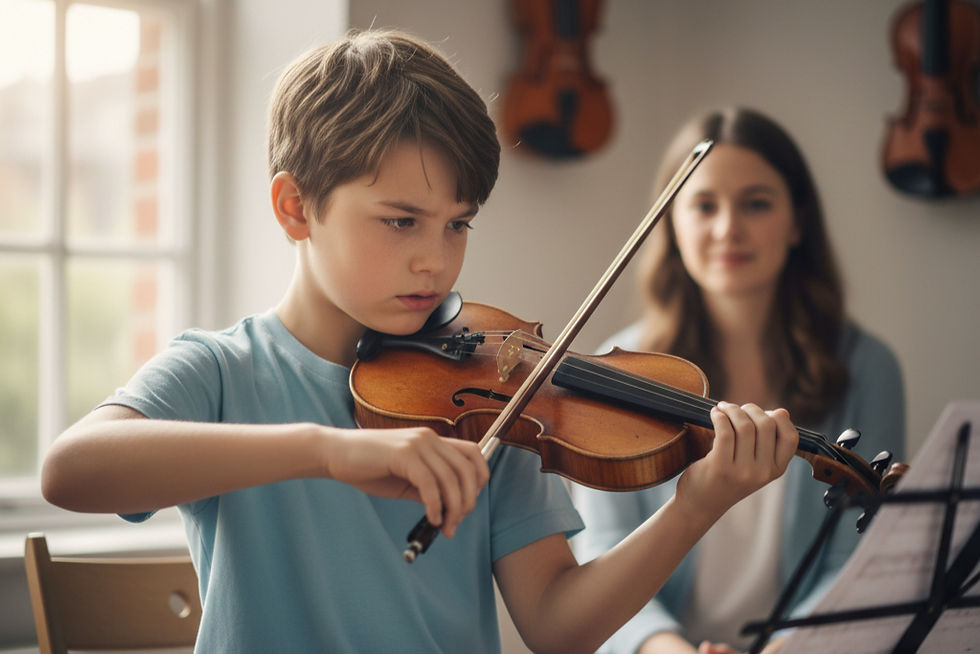
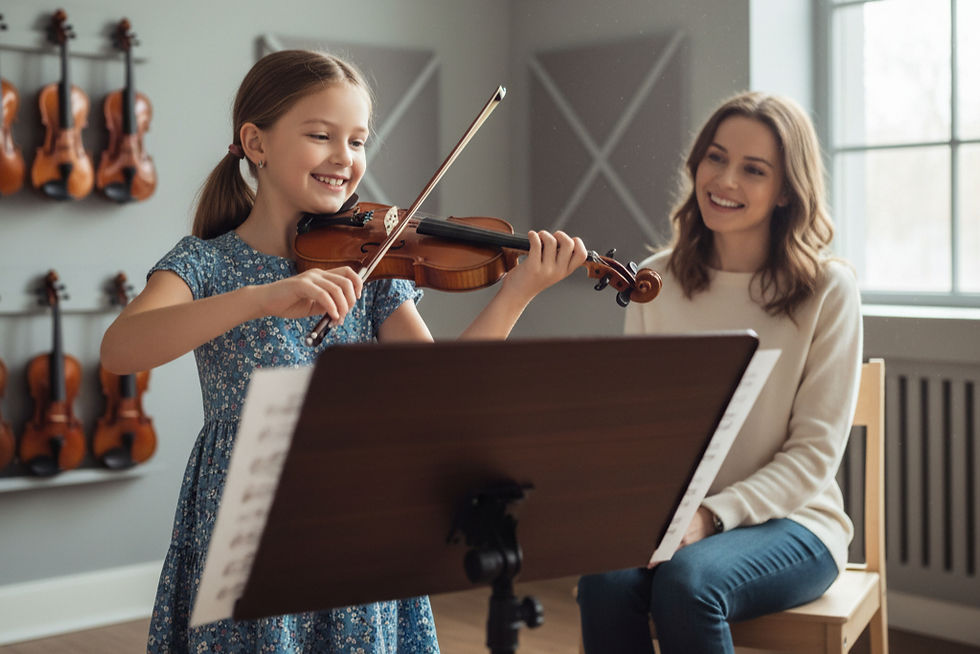
The violin is the soprano of the family, the highest and brightest voice, and it most often carries the melody. It is the smallest of the three, which means children can start youngest, sometimes as early as three or four, on a properly sized fractional instrument. The violin also has the largest repertoire of the three, spanning classical, fiddle, folk, pop, and film music, and it is the most widely taught, so there is no shortage of music or inspiration. The violin suits a child drawn to melody and a bright, singing sound, and one who does not mind that it is the most popular choice and therefore the most common.
The Viola: Warm, Rich, and In Demand
The viola is slightly larger than the violin and sits a bit lower, the alto voice of the family, with a warm, mellow tone that many musicians come to love deeply. It is held the same way as the violin, under the chin, but it reads from its own clef, which makes violists a little special. Here is the part worth knowing: there are far fewer violists than violinists, which means strong viola players are in real demand in orchestras and ensembles, often with more opportunities and less competition. The viola suits a child who is drawn to a richer, darker sound, or who likes the idea of standing out and being sought after in a group.
The Cello: Deep, Expressive, and Beloved
The cello is the largest of the three and the lowest in voice, with a deep, resonant, singing tone that is frequently described as the closest to the human voice. Unlike the violin and viola, it is played seated, resting on the floor on an endpin and held between the knees, which means no chin-and-shoulder position and, for some children, a more natural and comfortable posture. Fractional sizes make it possible for young children to begin, though the full-size instrument is large and less portable than its smaller cousins. The cello suits a child who falls for its warm, emotional sound, or who prefers sitting to playing with the instrument raised, and who does not mind carrying a larger case.
Violin, Viola, or Cello: How They Compare at a Glance
Here is a quick side-by-side on the factors most families weigh. The starting ages are approximate, since readiness matters more than a birthday for any of the three.
Factor | Violin | Viola | Cello |
Voice | Soprano, highest | Alto, middle | Bass to tenor, lowest |
Tone | Bright and brilliant | Warm and mellow | Deep, rich, singing |
Size | Smallest | Slightly larger | Largest |
How it is held | Under the chin, sitting or standing | Under the chin, sitting or standing | Seated, resting on the floor |
Youngest typical starting age | About 5-6 | About 7-8 | About 8-9 |
Portability | Very portable | Very portable | Bulky, needs a larger case |
Role in the orchestra | Melody, the largest section | Inner harmony, fewer players | Bass line and melody, always in demand |
How to Choose: Questions to Ask Yourself
A few honest questions usually point to the right instrument. First, think about size and comfort. A very young or petite child often does best starting on the violin, while a child who prefers to sit may take naturally to the cello. Second, listen together. Play recordings of all three and notice which sound your child leans toward, because the tone they love is the one they will want to practice. Third, consider temperament. Some children light up at carrying the melody, while others are drawn to the supporting, harmonizing role that viola and cello often play.
If you are unsure, that is completely normal, and it is exactly the kind of thing a trial lesson can settle quickly. Letting a child hold and try each instrument tells you more than any description can.
Does the Choice Lock Them In Forever?
Not at all, and this is worth saying plainly. Because the three instruments share so much technique, skills built on one transfer to the others, and switching later is common and straightforward, especially between the violin and the viola. Starting on any string instrument builds a foundation of bowing, listening, reading, and coordination that carries over. So choose the one that excites your child now, and trust that the door to the others stays open.
Start String Lessons at Preston Harmony
The surest way to find the right fit is to let your child try. Schedule a free trial lesson at our Preston Hollow studio, and we will help you compare instruments, find the right size, and get your child started with a teacher who makes the first lessons a joy. We teach children and adults of all levels, serving families across North Dallas, Highland Park, University Park, and Addison.
Explore our violin lessons, viola lessons, and cello lessons to learn more about each program.
Schedule a free trial lesson today and help your child find their instrument.
Warmly,
♫ The team at Preston Harmony School of Music
Frequently Asked Questions
Which String Instrument Is Easiest for a Child to Start On?
None of the three is truly easy at first, since all are fretless and depend on bow control, but each has its own gentle entry point. The violin is the smallest and starts youngest, while the cello's seated position feels natural and avoids the chin-and-shoulder hold some children find awkward. Good teaching matters far more than any difference in difficulty.
Which String Instrument Has the Best Opportunities?
All three offer rich musical paths, but the viola deserves a special mention. Because violists are less common, strong players are often in high demand in orchestras and ensembles, which can mean more opportunities and, later on, scholarships. That said, skilled players of any string instrument are always welcome.
Can My Child Switch Instruments Later?
Yes, and it happens often. The three instruments share so much technique that moving between them is very doable, particularly between the violin and viola. Time spent on any string instrument is never wasted, because the core skills carry over.
What Is the Best String Instrument for a Very Young Child?
For the youngest beginners, the violin is often the natural starting point because it comes in the smallest fractional sizes. The cello is also possible for young children thanks to small sizes and its comfortable seated posture. As with the right age to start, readiness and proper sizing matter more than the specific instrument.