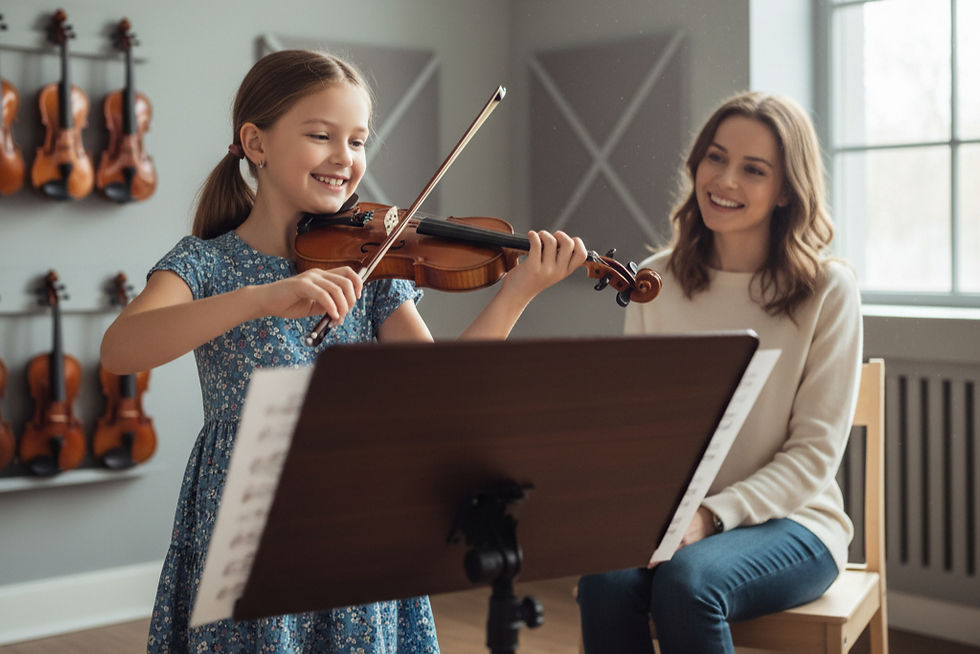
Why Does a Beginner Violin Sound Screechy (and When Does It Stop)?

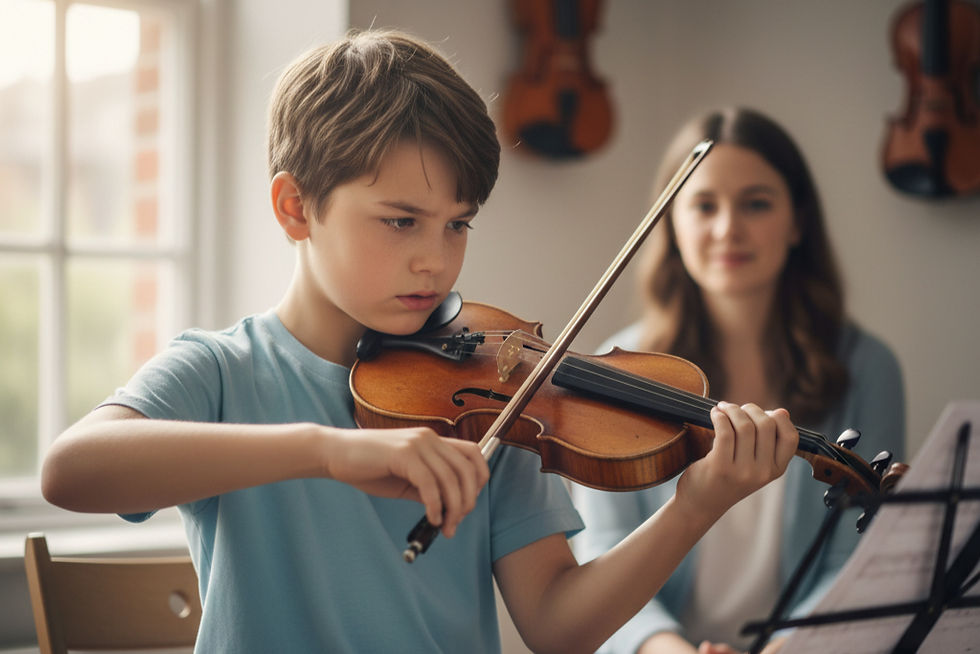
If your child's brand-new violin is producing a sound somewhere between a squeaky door and a distressed cat, take a breath. You are not doing anything wrong, and neither is your child. A screechy violin is one of the most common early frustrations for beginners and their parents, and it is almost always a passing stage rather than a sign of a bad instrument or a lack of talent.
This guide explains why a beginner violin sound screechy, what actually causes that scratchy, whistly sound, when you can expect it to improve, and the practical things that help your child move past it faster.
Is It Normal for a Beginner Violin to Sound Screechy?
It is completely normal. The violin is one of the hardest instruments to make sound good in the early weeks, precisely because the player, not the instrument, controls almost everything about the tone. There are no frets to guarantee correct notes and no keys or buttons to press. The sound is created entirely by how the bow meets the string, which is a skill that takes time to build.
Every violinist you admire went through this stage, no matter what age they started. The screeching is not a verdict on your child's ability. It is simply the sound of a beginner learning to control a demanding instrument.
What Causes That Screechy Violin Sound?
Most of the early sound problems come from the bow, not the left hand. Three things have to work together, and beginners are still learning to coordinate all three:
Bow pressure is the first. Too much weight crushes the string and produces a harsh, scratchy sound, while too little makes the tone thin and whistly.
Bow placement is the second. The bow needs to travel in the channel between the bridge and the fingerboard, and drifting too close to the bridge creates that piercing screech.
Bow angle is the third. The bow should move parallel to the bridge, and when it travels at a slant, which is very common at first, the sound turns rough and uneven.
Learning to balance weight, placement, and a straight, steady bow stroke is the single biggest key to a better tone, and it is exactly what a good teacher focuses on early.
The Left Hand and Tuning Matter Too
The bow is not the whole story. Because the violin has no frets, the exact spot where a finger lands determines whether a note is in tune, and notes that are slightly off can sound sour or harsh even when the bowing is fine. Early on, fingers are still finding their places, so some out-of-tune moments are inevitable.
A violin that has drifted out of tune makes everything sound worse, too. Strings slip over time, especially on newer instruments, so tuning before each practice session, or having a teacher or parent help, makes a noticeable difference.
Sometimes It Is the Equipment, Not the Player
Occasionally the instrument really is part of the problem. A few things worth checking: rosin, strings, setup, and size. Too much rosin makes the sound harsh and dusty, while too little leaves the bow slipping with no grip, so a light, even amount is the goal. Old or dead strings dull the tone. A poorly set-up violin, with a warped bridge or badly fitted parts, fights the player at every step. And an instrument that is the wrong size for your child makes good technique physically difficult.
If the screeching seems extreme or is not improving at all, it is worth having the instrument checked. A properly sized and well-set-up violin will not sound perfect in a beginner's hands, but it gives your child a fair chance.
When Does the Screeching Stop?
Here is the reassuring part. With consistent, guided practice, the worst of the screeching usually eases within the first several weeks to a few months. As bow control develops, the harsh and whistly sounds become less frequent, and a clearer, steadier tone starts to emerge.
Building a genuinely beautiful tone is a longer journey that continues for years, but the cringe-inducing early phase is typically short. Most parents notice real, encouraging improvement within the first few months, and a pleasant tone within the first year. The single biggest factor is steady practice guided by a teacher who prioritizes bowing from the start.
How to Fix a Screechy Violin
You can help your child move through this stage more smoothly. A few things make the biggest difference: make sure the violin is correctly sized and properly set up, keep a light and even amount of rosin on the bow, and tune the instrument before every practice. Encourage slow, patient practice on the open strings, where your child can focus entirely on producing a clean sound without worrying about the left hand. A relaxed posture and grip help enormously, since tension travels straight into the bow and into the tone.
Above all, keep the mood positive. The screechy stage is when beginners are most likely to feel discouraged, and warm encouragement is often what carries a child through to the point where the instrument finally starts to sing.
How We Teach Tone at Preston Harmony
Our violin teachers treat bow control and tone as a priority from the very first lessons, because we know that is what gets students past the frustrating early weeks and keeps them motivated. We help families with proper sizing and setup, and we build practice habits that develop a clean sound step by step. Some of our instructors also draw on the listening-focused ideas of the Suzuki method, which helps young students hear good tone and reach for it.
Patience and encouragement are part of our approach, not an afterthought. We want your child to enjoy the instrument long enough to hear how good it can sound.
Start Violin Lessons at Preston Harmony
If your beginner is in the screechy stage, the fastest way through it is guided instruction from a teacher who knows how to build tone. Schedule a free trial lesson at our Preston Hollow studio and we will get your child started on the right foot. We teach violin to children and adults of all levels, serving families across North Dallas, Highland Park, University Park, and Addison. Learn more about our Violin Lessons and schedule a free trial lesson today and help your young musician find their sound.
Warmly,
♫ The team at Preston Harmony School of Music
Frequently Asked Questions
Is My Child's Violin Screeching Because It Is a Cheap Instrument?
Not usually. In the early weeks, the screeching almost always comes from developing bow technique rather than the instrument itself. That said, a very poorly made or badly set-up violin can make things harder, so if the sound is extreme or never improves, it is worth having the instrument checked by a teacher or shop.
How Long Until My Child's Violin Stops Sounding Screechy?
With regular, guided practice, the worst of the screeching typically eases within a few weeks to a few months, and a clearer tone develops over the first year. Consistency matters more than hours. A few focused minutes most days beats one long session a week.
Does More Rosin Fix a Screechy Violin?
Usually the opposite. Too much rosin makes the sound harsher and dustier, not cleaner. The bow needs only a light, even coat, and a common beginner mistake is over-rosining. If the bow feels grabby or leaves visible dust, that is a sign to use less.
hould I Be Worried If My Child Gets Frustrated by the Sound?
Frustration is normal and not a reason to worry, but it is worth managing. The screechy stage is when many beginners feel discouraged, so gentle encouragement and celebrating small wins go a long way. A good teacher will keep early lessons rewarding so the sound does not become a reason to quit.