The Changing Voice: What Parents of Teen Singers Should Know


If your child sings and is heading into the teenage years, you may have noticed their voice starting to shift, crack, or drop, and wondered what it means for their music. The changing voice is one of the most normal parts of growing up, not a problem to be fixed, and it raises a fair question for many families about singing during voice change and whether it is safe to continue. The short answer is that it is, with the right guidance. Understanding what is happening makes this stage far less worrying and helps your young singer come through it with a stronger instrument than before.
What Actually Happens to the Voice in Adolescence
During puberty, the voice box, or larynx, grows, and the vocal folds inside it grow longer and thicker. Longer, thicker folds vibrate more slowly, which lowers the pitch of the voice.
In boys, this change is dramatic. The voice can drop close to an octave, which is why cracking and sudden shifts in pitch are so common and so noticeable during this stage. In girls, the voice changes too, though more subtly. It usually lowers a little and can become breathy or slightly unstable for a time.
The timing varies widely. Many boys begin changing between roughly twelve and fourteen, and girls often a little earlier, but there is a wide normal range. Comparing one child's timeline to another's is rarely useful.
Singing During Voice Change: Is It Safe?
This is the question most parents ask, and the answer is yes. A teenager can keep singing safely throughout the voice change, and doing so under the guidance of a teacher who understands the process is genuinely good for them. What matters is how they sing.
The goal is healthy, unforced singing. That means not straining for high notes that are no longer comfortable, not pushing volume, and not forcing the voice into a range it has temporarily lost. Singing gently within the range that feels easy keeps the voice healthy and keeps the student progressing. Stopping entirely is usually unnecessary and often does more harm than good, for reasons we will come to.
How the Change Affects Range and Confidence
For a while, a changing voice has a smaller and shifting range. Notes that were easy last year may be out of reach this month, and the reliable parts of the voice keep moving. This is temporary, but it can be frustrating for a student who was used to singing certain songs with ease.
The emotional side matters just as much as the physical. A cracking voice can feel embarrassing for a self-conscious teenager, especially in front of peers. A student who understands that this is normal, expected, and shared by every singer their age is far more likely to keep going with their confidence intact.
How a Good Teacher Handles the Changing Voice
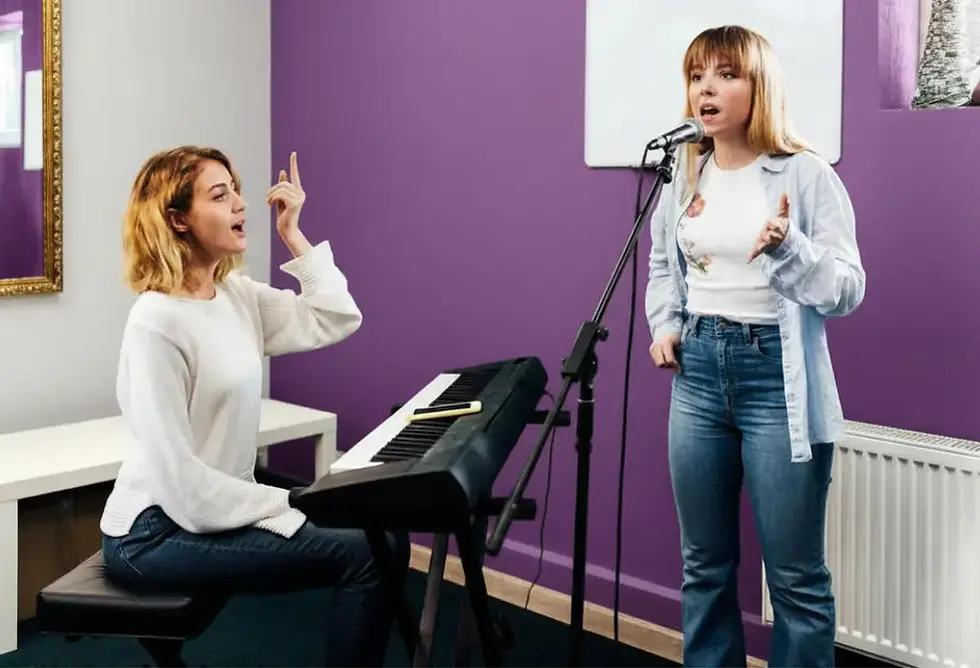
This stage is exactly where an experienced voice teacher earns their keep. Rather than pushing a student to sing as though nothing has changed, a good teacher adapts.
That means choosing repertoire and keys that fit the voice as it is right now, and adjusting them as it continues to shift. It means working within the comfortable range rather than reaching for notes that strain. And it means leaning into the parts of singing that do not depend on a settled voice: breath support, ear training, musicianship, rhythm, and musical expression. A student can make real progress on all of these while the voice itself is unsettled, so they come out the other side ready to apply a mature instrument to skills they never stopped building.
What Parents Can Do at Home
Your support makes a real difference during this stage. Treat the changes as normal, because they are, and avoid teasing about cracks or squeaks, which can quietly convince a self-conscious teenager to stop singing altogether. Encourage singing without pressure, and let it stay enjoyable rather than becoming another performance to be judged. Basic vocal care helps too: staying hydrated, resting the voice when it is tired or sick, and avoiding a lot of yelling. Most of all, keep them enrolled and connected to a teacher who can guide them through it.
Why This Is the Worst Time to Quit
Many young singers stop lessons right when their voice starts changing, discouraged by the cracks and the lost range, and a good number never return. That is the real risk of this stage, and it is worth guarding against. The change is temporary, but quitting often is not.
A student who continues through the voice change, with a teacher adjusting the work along the way, keeps building skill the entire time and emerges with a mature, capable voice and the technique to use it. The ones who stop lose momentum, confidence, and often the habit of singing entirely. If there is one message for parents here, it is that the changing voice is a reason to keep going, not a reason to pause.
Voice Lessons for Teens in Preston Hollow
Preston Harmony School of Music teaches teenage singers through every stage of the changing voice at our Preston Hollow studio in Dallas, serving families from Highland Park, University Park, Addison, and across North Dallas. Our voice faculty adjusts repertoire, range, and pacing to fit each student's voice as it develops, so young singers stay engaged and keep improving.
The changing voice is a stage to move through, not a reason to stop. Schedule a complimentary trial lesson and give your teen a teacher who knows how to guide them through it.We offer a complimentary trial lesson so your teen can meet a teacher and get comfortable.
Ready to Keep Singing? Learn more about our Voice Lessons and Contact Us to schedule a trial lesson today!
Warmly,
♫ The team at Preston Harmony School of Music
Frequently Asked Questions
Should My Son Stop Singing While His Voice Changes?
No. With healthy technique and a teacher who adjusts range and repertoire, boys can and should keep singing through the change. Stopping usually costs more than it protects.
At What Age Does the Voice Change?
It varies widely. Many boys begin around twelve to fourteen and girls often somewhat earlier, but a wide range is completely normal. Timing is individual, not a measure of ability.
Will the Voice Change Ruin His Singing?
No. It is a temporary stage, not a permanent loss. Students who continue with guidance come through it with a fuller, more mature voice than they had before.
Do Girls' Voices Change Too?
Yes, though more subtly than boys'. A girl's voice usually lowers slightly and may become breathy or a little unstable for a time before settling.