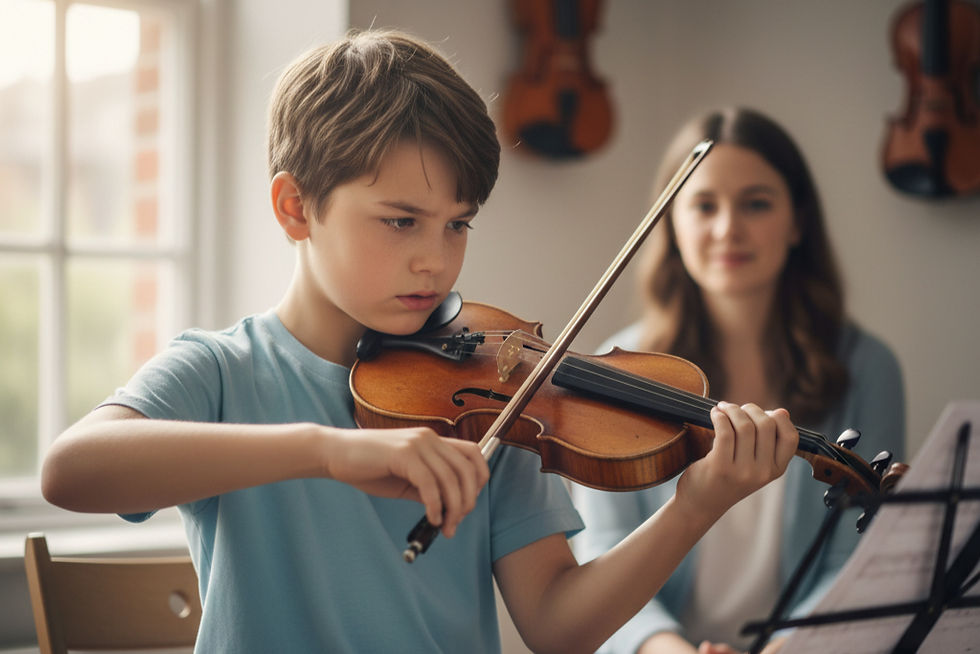
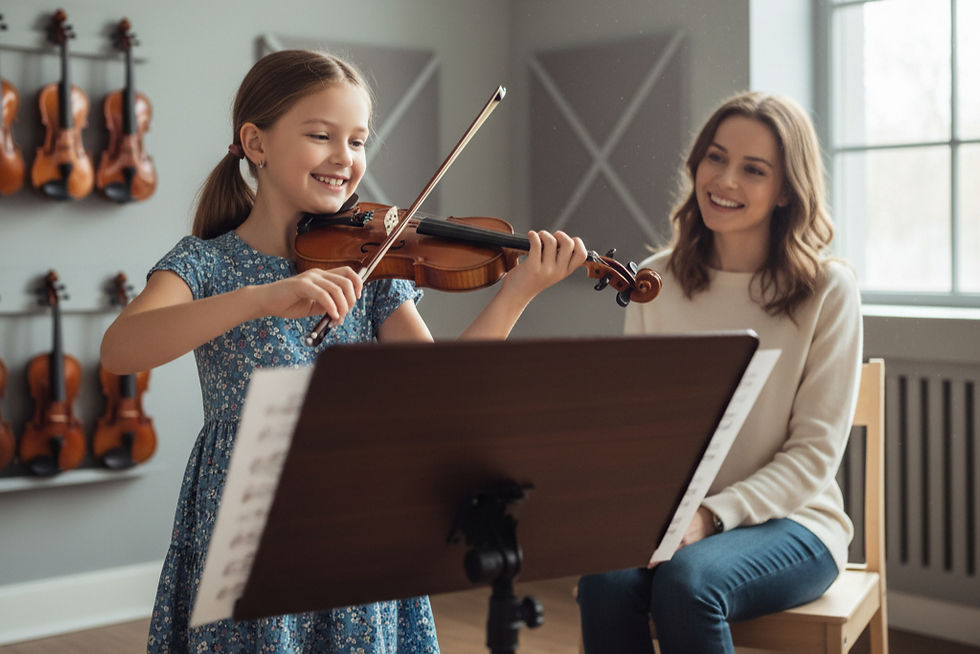
The Benefits of Learning Violin for Children

When parents weigh an instrument for their child, they are usually asking about more than music. They want to know what the experience will build in their child over the years. The benefits of learning violin for children run remarkably deep, reaching into focus, memory, coordination, confidence, and emotional growth, and many of them last long after a child sets the instrument down.
This guide walks through what your child stands to gain, honestly and without overselling, and why the violin in particular offers such a rich return on the effort.
Why the Violin Is Such a Rewarding First Instrument
Part of what makes the violin so beneficial is that it requires a great deal of the player. There are no frets to guarantee correct notes and no keys to press, so every sound depends on careful listening and precise control. That demand is exactly why the payoff is so rich. A child who learns the violin is training their ear, their hands, and their patience all at once, and those are skills that transfer well beyond the practice room.
Cognitive and Academic Benefits
The connection between music training and the developing brain is one of the most studied areas in music education. Research has linked learning an instrument to gains in attention, working memory, and the way the brain processes sound, and these skills often support reading and language development. Learning to read music is a form of literacy in its own right, one that asks a child to decode symbols and translate them into action in real time.
It is worth being honest here. Music lessons are not a guaranteed shortcut to higher grades, and no instrument makes a child smarter on its own. What the violin reliably offers is rich, structured mental exercise, and that kind of engagement tends to serve children well in and out of the classroom.
Focus, Patience, and Perseverance
Few activities teach sustained attention the way the violin does. Progress comes in small increments, and a child quickly learns that careful, repeated effort is what produces results. Pushing through the challenging early weeks, when the instrument is harder than it looks and does not yet sound the way they want, builds genuine perseverance. That experience of sticking with something difficult and slowly getting better is one of the most valuable lessons the violin teaches, and it is why the early screechy stage is worth pushing through rather than avoiding.
Fine Motor Skills and Coordination
The violin demands that both hands do entirely different jobs at the same time. One hand draws the bow with a steady, controlled motion while the other presses precise spots on the strings, and the two must stay in constant coordination. This kind of bilateral coordination develops fine motor control, dexterity, and body awareness. Good posture and balanced positioning are part of playing well, so children also build physical habits that carry over into other activities.
Confidence That Grows With Every Performance
Mastery builds confidence, and the violin offers a steady stream of small victories: a clean note, a first song, a piece played from memory. Recitals and performances add another layer, teaching children to prepare, to manage nerves, and to stand in front of others and follow through. The poise a child develops from performing tends to show up in classrooms, presentations, and situations far removed from music.
Emotional Expression and Creativity
The violin is a deeply expressive instrument, capable of conveying feeling in a way that resonates with children. Learning to play gives them a healthy outlet for emotion and a creative language of their own. Working toward a beautiful phrase, interpreting a piece, and making music their own all nurture emotional awareness and creativity, and for many children the instrument becomes a genuine source of comfort and joy.
Social Skills Through Playing With Others
Music is often made together, and that is where some of the best social growth happens. Playing in a group, whether a small ensemble or a full orchestra, teaches children to listen to others, to keep their part while blending with the whole, and to contribute to something larger than themselves. These experiences build teamwork, patience, and a real sense of belonging, and they are a wonderful reason to explore the wider world of string playing.
Why the Violin, Specifically?
Many of these benefits come from learning any instrument, but the violin brings advantages of its own. Because it is fretless, it trains a sharp, discerning ear and a fine sense of pitch that few other beginner instruments require. Its fractional sizes mean children can start young, on an instrument that actually fits them. And the violin opens the door to orchestras, chamber groups, and a lifetime of playing, from classical to fiddle to film scores. It is portable, social, and endlessly deep, an instrument a child can grow with for decades.
Start Violin Lessons at Preston Harmony
The best way to see these benefits take root is to get your child started with a teacher who makes lessons rewarding from the first week. Schedule a free trial lesson to visit our Preston Hollow studio and we will help you find the right fit for your child. We teach violin to children and adults of all levels, serving families across North Dallas, Highland Park, University Park, and Addison.
Learn more about our Violin Lessons and schedule a Free Trial Lesson today to give your child a head start on a lifetime of music.
Warmly,
♫ The team at Preston Harmony School of Music
Frequently Asked Questions
What Are the Main Benefits of Learning Violin for Children?
Learning the violin builds a wide range of skills: focus, patience, memory, fine motor coordination, confidence, and emotional expression, along with the musical ear the instrument uniquely develops. Many of these benefits carry over into school and everyday life, which is why so many parents value music lessons well beyond the music itself.
At What Age Can My Child Start Enjoying These Benefits?
Children can begin the violin quite young, often between the ages of three and seven, thanks to fractional instrument sizes that fit small hands. Readiness matters more than a specific age, and even older beginners gain the full range of benefits. If you are weighing timing, our guide on the right age to start violin lessons goes into more detail.
Does Learning Violin Really Make Children Smarter?
Music training is linked in research to stronger attention, memory, and sound-processing skills, and it often supports language and reading development. That said, no instrument is a guaranteed boost to intelligence or grades. The honest benefit is that the violin gives children rich mental exercise and lasting habits of focus and discipline, which tend to serve them well.
Is the Violin Too Hard for Young Children to Benefit From?
Not at all. The violin is challenging, but that challenge is part of what makes it so beneficial, and good teaching meets children at their level. Early lessons are playful and paced for young learners, so even very young children gain focus, coordination, and confidence from the start.